Wednesday, June 27, 2012

Armenian Yogurt

Yogurt is one of those foods that seems epically scary for really no reason at all - I guess I always just assumed it would be hard to make? In actuality,  it's ridiculously easy to make yogurt and so even the most inept of chefs (cough cough) feel pretty much like a pro. The key to a delicious yogurt is, no surprise, the starter. I have even heard rumors of some mystical munchery in San Francisco where they feature a 2,000 year old line of yogurt....
I guess I personally don't really know where to recommend getting a yogurt starter.  But if anyone happens to offer one to you, 'jump on it!' I say. That's what happened to me at least - while at a delicious Armenian feast the other day (omg so good = bell pepper and mint salad, armenian cheese, sour plums, zaxtar bread, crispy bread rice and herby stew!), my host said "You should take some of my dad's sour yogurt and make your own batch." How could I say no? I couldn't in fact, and a few days later, I found myself in the kitchen with a friend, a 1/2 gallon of milk, and yogurt on the brain.

So how exactly do you go about making your own...?

1) I started with 1/2 gallon of 2% milk

2) I brought it to a boil, slowly, while stirring pretty regularly

3) Boil for no more than 5 minutes, stirring constantly

(SIDENOTE: if you keep taking the forming milk skin layer and stack it on a plate, you will end up with a creamy, buttery, basic cheese that is ridiculously tasty)

4) I let the milk cool for about 20 minutes, until I could put my pinky finger in it and it felt like a warm bath (so around 100 degrees)

5) As part of my prep, I had taken the yogurt out of the fridge, let it warm up a bit, and spread 2 spoonfuls all around the bottom of a large ceramic bowl

Day 1 Yogurt
6) Pour the warm milk into the bowl

7) Cover with a cloth or perforated tin-foil

8) Let it sit overnight at room temperature (stick it in the oven to preserve warmth if you think the house will chill down a bit that night)

9) And then stick it in the fridge to settle for a day or two

NOTE: Do Not Mix at any time after pouring. After 12 hours, you can separate out some of the yogurt (for friend-distribution, changing containers, or the like), but it will stop souring. If you want your yogurt as sour as the original, be sure and let it sit for 2-3 days straight without disturbing. Also, the original pour should be in ceramic if you want to limit random lumps.

Day 3 Yogurt

And Voila! Delicious sour yogurt! So easy, so tasty and really quite healthy. People keep asking me what the difference is between Armenian yogurt and other yogurts, but unfortunately I am no yogurt expert. It's really sour and tangy, so that would be my first guess. And I hear that Armenians are the traditional transporters of yogurt to North America. Also, I got it from an Armenian...=does that count?

"As one of Armenian ancestry, I had heard stories of the difficulty in bringing in, through U.S. customs, the bacterial culture that is needed to make yogurt. As immigrants were processed at Ellis Island, the INS officers would look at the little jars of yogurt starter carried by the immigrants. they would have most certainly opened the jars and smelled the sour, acrid odor of the bacterial culture. It was of course immediately thrown into the trash. In correspondence to the old country, one Armenian immigrant bemoaned the fact that they could neither buy or make this diet staple they had enjoyed for centuries. An enterprising woman in Turkish-Armenia, who was shortly leaving for America, came up with a solution to the problem. She took clean white handkerchiefs and dipped them into a large bowl of yogurt and then hung them out to dry. She then carefully folded them with her other linen and packed them in her trunk. After she got to the U.S. she had no difficulty in going through customs with clean white hankies. Once settled, she dipped these hankies in warm milk and thus freed the bacteria to culture and make yogurt." - via www.gutsygourmet.net
 

Or to learn from the real professionals....


Please note: The translation is incorrect. The first child says "My favorite food is Tolma"

Tuesday, February 22, 2011

Adventures in Crockpot Cooking: Burmese Curry

So I was gifted with a Crockpot a ways back, and I was a little unsure how to make best use of this crafty culinary machine. It kinda of seems like something that can only be used to create a stew of some kind. Lo-and-behold, my first attempt of Crockpot cooking was none other than the legendary vegetarian chili. Scrumdidiliumptious. This is when I realized that the gift of the Crockpot is that you can make something delicious for $10 and then eat it for a week straight! A metaphorical Jesus figure for the monetarily disadvantaged! And Crockpot cooking can really be extended to really any sort of saucy dish. And so my curry was birthed. I based this beauty on a Burmese egg and okra curry from one of my new favorite restaurants, Burma Superstar. Of course, my idea of referencing a dish is having at least 45% of the same ingredients (omg, it's almost like Taco Bell....). Basically, I fried up a bunch of onions, garlic, carrots, jalapenos and other assorted peppers, fresh ginger and spices and then pureed it and threw in the Crockpot with bell peppers, tomatoes, a bunch of coconut milk, more spices (mostly cayenne, tumeric, chili powder, pepper and salt) and some okra. Apparently the key to okra is laying it out to dry on paper towel for 30 minutes to avoid sliminess. It's my new goal to try and use as many of the vegetables at my local markets as possible. And it might be a lofty one since I have zero idea what to do with a durian or a bitter melon! Oooh. And I also cracked two eggs right into the Crockpot and let them cook with the curry = delish! Finally, I sauteed some mushrooms with butter and threw that in towards the end. All in all, a very successful dish. And perfect for the wonders of the Crockpot! Who knows what else I'll cook up.....literally!


The Colbert ReportMon - Thurs 11:30pm / 10:30c
Gordita Supreme Court
www.colbertnation.com
Colbert Report Full EpisodesPolitical Humor & Satire BlogVideo Archive

Saturday, January 29, 2011

Peruvian Picarones!

Every country that I have visited has at least one food that I just cannot get out of my head. I may have some luke-warm memories about the food overall (cough cough Peru), but man oh man, there has to be at least one gooey or glorious concoction that haunts my dreams. Picarones are that Peruvian perfection. Granted, there is no way I could ever live up to the sizzling standard of that little old woman, sitting on a stool next to a giant pot of boiling oil, poking at the dough with her wooden stick and letting those babies float in the oil till they turn golden brown. But, I just had to try. So onto the baking. Picarones are essentially squash donuts, and the recipe is not that complicated (especially when you make it tesla-style). I cubed one of those squash crescents that you can get at the market for a buck (easier than splitting one yourself) and boiled it in water with a bunch of cinnamon for 10min. Then I mashed it together with a couple of eggs and some salt. I let 2 cups of the water cool down to yeasting temperature and proceeded to mix it with one of those packages of yeast. After the yeasting, I added the water to the squash and eggs, and then slowly added flour until it was a good, sort of post-pancake/pre-bread texture. Oh, and you probably want some sugar to sweeten things up a bit. Let it sit for an hour and shazam! you're ready for frying. The best part about these donuts (ok, one of the best parts) is that they fit perfectly into the toaster for days to come! The other best part is that they have squash in them so I can pretend like they're healthy! Really, you can't go wrong. Mmmm.....Picarones. Oh, and I threw in this picture of well-executed picarones so you can see how the tesla-substitute compares. All of my food may look wonky on the outside, but on one hand, I haven't been frying picarones by the side of the road for the last 40 years, and on the other hand, it tastes good and that's what counts? Right? At least when I'm cooking....I think I probably should have cut down the recipe a bunch and gone for a thicker texture, but damn! it was calling for a friggin' pound of flour!

So yes. Add more yeast and flour for fluffier picarones. Top with honey, jam, peanut butter, nutella, cinnamon and sugar....or all of the above concurrently. Here's an official recipe if you are interested.

Friday, November 19, 2010

Fajita Fiesta

Ahhhh, fajitas. I know that it's overly dramatic to say that I live or die by fajitas, but some days it certainly feels true. If everyone has that one sure-fire staple, the food you can eat day in and day out, then staple me with fajitas baby. They are just so.....delicious....and cheap.....and easy (an excellent combination in many situations)....and delicious....and surprisingly healthy. At least, that's what I tell my stomach. I'm mostly a veggie girl myself: throw in some diced bell peppers, squash, onions, and you have yourself a bonafide vegetarian dinner. But as with all good things, the gloriousness of fajitas comes in the mix-n-match. This picture, for example, is a result of an evening of meat sharing (another wonderful activity) between myself and the roomie. Our ingredients combined and wahla! a delicious fried chicken fajita feast. I also have been known to enjoy carrots, potatoes and even green beans in my fajitas, although the bells are pretty much a requirement. Let's see....what else do you need? Oh yes, Masa is definitely the way to go here people. It may seem scary, but the whole making-fresh-tortillas thing actually is mostly painless. You buy the Masa flour from Safeway (or the like) and mix it with water and some salt. Once it is a dough that is not sticking to your fingers, flatten it out on a piece of plastic wrap and throw it into the frying pan. Presto! (I'm digging the magician theme today...). Cheese and avocado top me off, but I recommend sprinkling all sorts of things on top of that puppy. Fajitas are the neverending gift! The best part is, the tortillas last in the fridge for like a week. And any God-Fearing American knows all the wonderful things that can result from a tortilla!


And yes.....that's a Mexican magician.

Friday, November 5, 2010

Panqueques

I've been encouraged to expand my food posts to those articles which can be prepared and consumed by the humble student with little money and no time to trek across the city for delicious food. So here I am, ready to share my most secret and delicious of personal grad-school recipes with you. I'll start off with a glorious Ecuadorian delicacy, a recipe I learned while living with a family in Bahia de Caraquez, a coastal city. These are panqueques, quite literally "pancakes." In contrast to the U.S. style, Ecuadorian panqueques are savory and can be eaten at any time of day. They are also perfect for fulfilling cravings for fried foods, and they can be transported, reheated and many other useful verbs that make them, overall, quite a wonderful thing. You make them just like regular pancakes: flour, sugar, salt, egg, dash of oil, a bit of milk, and water to texture. If you're feeling especially lazy or out of ingredients, you can actually just use boxed pancake mix. There's no shame. Then you add the cheese. In Ecuador, they have a special Farmer's cheese that is super salty and comes in little chunks sold in bags. While there are many queso granjeros through which to sort at my neighborhood groceria, I have found that often the easiest and safest cheese route is through the land of feta. Any kind will do. I've been buying the cheap "domestic feta" at about $6 a pound. So then you crumble in the cheese, oh delicious cheese. Throw some vegetable oil in the pan and commence frying! The rest should be easy. I recommend a dash of salt on top, although the possibilities really are endless. Speaking of which....I left a couple of panqueques in the pan and I'm thinking of heading back into the kitchen. Or as the Rangers would say (no..don't boo! not those Rangers!), "leave no man behind." And....break.

Mission Mania #5 - Kiji (22nd and Guerrero)

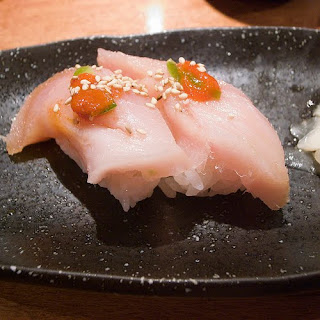
Coming in at sweet number five is this most delicious of delicates located on the lone island block of 22nd and Guerrero next to a few other mildly interesting restaurants (and the NOT interesting Tuba) and a couple of bars. Lord knows, I love me some sushi. In fact, it might be my most favorite of food genres. And Kiji exemplifies all of the flavor-based reasons one might idolize this type of cuisine. We are talking the freshest of fish with unique combinations and constantly evolving daily specials. But, I might have a sweet spot for this beauty since Kiji introduced me to the glories of the living sea butter, otherwise known as sea urchin. Ah uni, you are like the secret to transcendence and peace on earth all at once. And for an extra buck or too, you can get belly pieces of your favorite fishes, a choice I highly recommend. The salmon belly will melt in your mouth in ways that almost seem R-rated. They also offer unique creations that will delight and inspire. For 5$ you can get a melt-in-your-mouth shot that includes an oyster, uni, raw quail egg and salmon roe, a decision that will satisfy many of your rawness cravings at quite a reasonable price. True to San Francisco form, the restaurant is a little pricey (it's okay - when dealing with raw - quality is worth the price), so expect to spend about $25 per person. Also, you must be prepared to deal with some mild electro music and ridiculous mood lighting. It's almost as if Virgin's red-headed twin has expanded its tentacles into the most tasty of professions and you're stuck dealing with the music as compensation for the empty seat next to you.

Final judgment: "Oh, it's so worth it. Suck down the bounty of the sea - with fresh options of abalone and geoduck, along with toro, uni and sake favorites, you are guaranteed a graciously delicious dinner of the Pacific Ocean's finest."


Wednesday, August 25, 2010

INTERMISSION: 3 Weeks in Northern Argentina

That's right folks, I just returned from a generous stint abroad in none other than Northern Argentina. Now, apparently, and for no good reason as far as I can tell, Americans don't really go to Argentina. In fact, we probably only ran into a baker's dozen worth of Americans in our three weeks wandering around. Not to say that there weren't a bunch of awkward tourists. It's just that most of them came from France, with a spattering of Dutch and English, some Spanish and of course, many Porteños. Porteños refer specifically to inhabitants of Buenos Aires, the capital of the country and a giant mass of city, weighing in at just over 14 million when you count the suburbs (ie slums). Indeed, it is a country of extreme disparities, with tourists from the cities easily spending $80 USD on a hotel while the people outside are lucky to have electricity and running water. But this isn't some sort of hippy-dippy, help the world, anthropological analysis blog or anything. This blog is about food. And food, we ate much of. After some heavy (alright...after-dinner plump) thinking about the subject, I have decided to divide the food of Argentina into three, Ven Diagram-esque, categories of the food life, cleverly entitled: A.M., P.M. and Everything Else. Let's begin, shall we?

A.M. Ah, the morning. Such a glorious, leisurely time in Argentina. Whether we spent the morning lazing around, watching the sun come out and the heat come up, or we huddled behind a warm cup and beefed up on bread products to prepare ourselves for the chilly jaunt around the city, the morning was always a satisfying experience. This is in no small part due to the omnipresent spectacle of the cafe con leche (latte) and medialuna (croissant) combination that graced so many of the numbered-combo menus around the country. Oh, did I forget to mention?: the European conquest of Argentina, while for better or for worse, has been a major factor in many aspects of life, including the daily ritual known as breakfast. This ritual, when done properly, should last for at least an hour and take place in a cafe: with or without WiFi is your own concern. Medialunas come in a variety of forms, but the only guaranteed presence will be the dulces. As with all of their food, Argentinians prefer things sweet, and medialunas are no exception. On our trip, we only stumbled across salty medialunas one time, and while they were delicious, they were an entirely different pastry all together, lacking the plump air balloon quality of the classics and instead presenting a harder, denser, more sailor-made bread product that gave one a feeling much further from the warm ovens of the cozy cafe. A good cafe will most likely accompany any ordered combination with a shot or two of additional beverages including the nefarious agua con gas (sparkling water, a new obsession of mine) and potentially a fresh juice or a creamy fruit product. As a long-standing fan of the King's Banquet style of dining, I strongly support the multiple beverage approach and heartily condone the completely-covered table as an important item in the morning partake. Other A.M. items might include a hard-boiled egg, a variety of obscenely sweet pastries and cookies, teas, toast and marmalade, and even the occasional fry-bread or sweet potato loaf. You can see why lingering is encouraged. And this is totally making my slightly stale bowl of Cheerio's breakfast jealous...

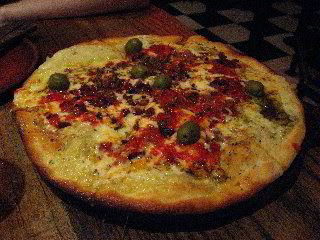
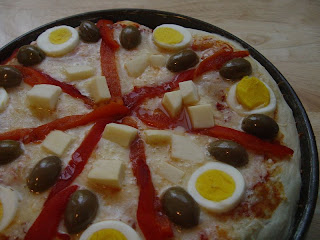
P.M. So, ultimately I have divided the food stylings as such because there is virtually no distinguishable difference between lunch and dinner, at least as a tourist, in Argentina. Every afternoon, the choice has to be made: how many meals do I want to have meat in them today? For the vegetarians in the audience, this clearly is an easy decision, and they are instantly resigned to alternating between cheesy pizza and cheesy pasta, with a few (possibly cheesy) potato options thrown into the mix. No vegans, I am afraid this is not the land for you. In fact, this is probably the only arena I've ever been to (excluding Wisconsin) where a block of cheese is considered a well-rounded meal. It's a damn shame that I don't like the stuff.....NOT!!! Cheese is like one of my favorite food groups! But I would be lying if I didn't say that I'm happy to be back in a land of cheese-less Ethiopian and Thai foods. Ah, sauces. There is no such thing as a strong sauce in Argentina. They were the Kings and Queens of Suave; the Mavens of Mild. If you have a dainty palate, prepare to be amazed with the diverse differentiations of delicacy that can be served up out of corn, sweet potato, pastas, more corn, and cheese. But back to the meals. So does meat sound good for dinner? Okay, sure. That means I'll take a pizza for lunch. They do know their way around a fine pizza. But like hamburgers in the United States, choose wisely, because a wide range of product can be returned. The worst had huge puffy crusts and little toppings, more like a focaccia toast with not enough spread. While the best included fresh cheeses and pickled vegetables, thick and chunky tomato sauce, and the requisite array of unpitted green olives to top the pie. There were many options, especially in the city, and some were too bizarre for even me to dare. EG that ridiculous smoked salmon and brie concoction in the outer Once area of Buenos Aires. Yikes.
Meat for dinner comes with a variety of tasty decisions. Steak is the most known meat of Argentina, and it comes in forms that span from thin steak sandwich to thick steak sandwich to just a thick steak. Milanesa, or fried thin steak, was also quite popular. In the Western side of N Argentina, right around the base of the Andes, llama is one of the meattastic attractions, eaten by locals and visitors alike. I also had the pleasure of munching a goat leg, which I'm always surprised isn't served in the United States. The fat of the goat is so rich, it's definitely almost illegal. It's the one bite and you remember it for days sort of food that could soar up the ranks in fancy one-bite foodie restaurants. But I also think the same about goose-necked barnacles, and no one I know has captured that flag and made a run for it, so....we'll see. Oh, and there's also some pork running around. And if you're daring, which we only were one time, thank goodness, you can order the full parilla for two. This is like a mobile charcoal-bed slaughter house carrying at least 3 different animals. You get some pork chops, steak, chicken, blood sausage, regular sausage, kidney, liver and intestine. And by the end, you never want to see the insides of another animal. But don't worry: this will pass.

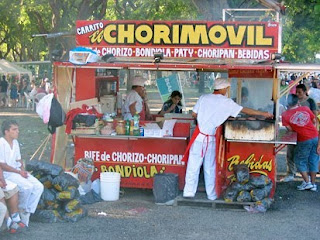
For me, Argentina was not about the search for the perfect steak. No, no, it was about the search for the perfect choripan, a chorizo (spicy sausage) sandwich topped with a variety of tangy vegetable options. But some gifts come for a price: my long quest eventually revealed to me that it was not the chorizo that made this sandwich so heartwarmingly desirable. No my friends: it was the toppings. And only the toppings at Chorimovil, located behind Dique 1 in Puerto Madero, Buenos Aires, are enough to move mountains. Tomato, lettuce and mmk (mustard, mayonnaise, ketchup) are doable. Basil oil and chili paste make me come back for more. But it is the vinegar-based pickling of red and white cabbage, carrots and onions that really send it soaring to the heavens. And that's why our last day was spent down on the marshlands, in the midst of millions of different parillas (grilling stands), munching down on a pork chop sandwich outside of Chorimovil, no Choripan in sight...The feeling of betrayal will pass, I'm sure.

To go along with the meats, potatoes are quite common. As in, everywhere. Whether they are pureed, fried, baked, boiled or gratined, they are definitely available. Rice also happens. And quinoa is a big thing near the Andes. Don't expect to eat any vegetables of any kind. I'm not sure how they do it, but my current hypothesis includes a combination of cigarettes, early deaths and coffee to keep most of the Porteños reasonably thin. Because healthy foods are pretty much nonexistent.
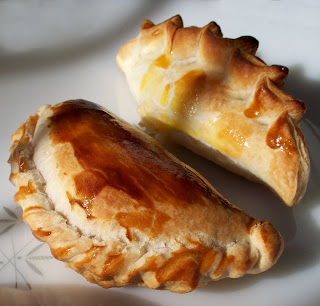
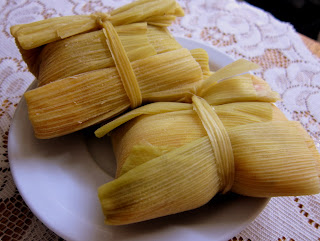
Appetizers, on the other hand, definitely do take place on a regular basis. Sideshowing as side-of-the-road snacks, empanadas, tamales and humitas can be found all over the northern chunk of the country, although the latter foods are definitely more of a mountain-range type of cuisine. Tamales are essentially the same in Argentina = filled with meat and corn, and trussed up in a corn shuck. Humitas, quite deliciously, are essentially the same thing but SIN CARNE, or meat-free, a delicacy that can sometimes be too hard to come by. They make up the mix with more corn and goat cheese, although not like the kind we think of in the States. In NW Argentina, goat cheese is the epic farmer's cheese, ie the you-find-it-everywhere, default, cheddar of the south. It has a hard texture complexity with the slight resemblance to mild feta that makes it an inhalin' good substitute when in withdrawals and dreaming of cheese. Empanadas, however, make a grandiose appearance in Northern Argentina and are frequently the only thing being served (other than pizza) at the late night music shows that are a bi/tri-weekly must-do in every city. The standard flavors come in chicken, beef, and ham and cheese, although occasionally you stumble across a vegetarian option. Like most things (screw you Passport Health!), the most delicious empanadas were to be found in the (gasp) street-food alley, sold out of a warm basket by an abuelita with husband in tow. Being recently fried, having fresh meat and a fabulous crust made this the best empanada of the trip, and we were sad to see that she had moseyed off in search of other customers by the time we wandered back that way for seconds.
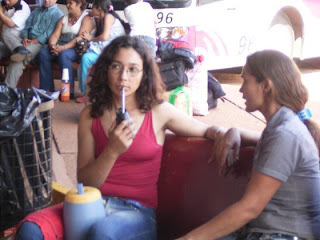
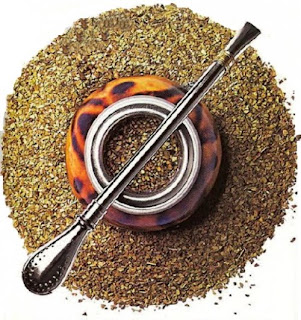
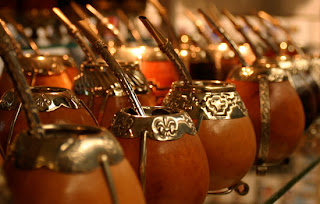
EVERYTHING ELSE Wait, you might be thinking. So what does one stuff into an 'other' section after all that other nonsense? Desserts? Why, yes, there were desserts. Obscenely sweet is how they like things down there. Sugar cane honey can make anyone reach for the water glass. And five flavors of flan can only go down for so many meals. And, with all the medialunas, who was really thinking about pastries? Not a lot to report back on desserts. Alcohol is also an other. The 1 liter glass bottle of bad beer is the standard unit of yeast measurement. So, there's that. And all the wine is pretty dang good, each bottle usually ringing in at a lowly $10 USD. Not bad at all. Nothing negative to report back on wines. But no, this section is for coffee. And tea. But you already mentioned coffee! you proudly bite back with. Tis true, tis true. But I would be remiss not to mention it again. There are two things in which every person in Argentina imbibes more than any other. Actually, they usually pick one and stick to it. It's a familiar jingle actually. That's right: coffee or tea. By coffee, they actually mean lattes. And that's just delicious. I'm a coffee girl myself. And it's amazing when even the smallest cafe with plastic chairs has an espresso machine sitting in the back. Ah, lattes. It gets a little overwhelming at first with the coffee everywhere. By the end, I was limiting myself to ~3 cups per day: the breakfast requisite, the siesta-time chaser and the late-night reviver. Of course, they have like zero caffeine in those little mugs, so with the warm milk, it's not the most effective system. But it is delicious. And that's the important part. And, who can go to Argentina and have a foodie blog without taking about Mate? It's impossible! So, it's like a personal tea maker, with a straining spoon that you keep filled with tea leaves. All you need is a personal thermos or a friendly vendor. Seriously, this might be the only place where you're as likely to find boiling water as you are a cold bottle of the stuff on the side of the street. There are a million different kinds of teas, and kids cups, and basically everyone you see is carrying this teapot around with them. Inside museums, in secured bathrooms, in hostels, in restaurants. Mate, mate, mate. And, of course, Spencer had a long-running joke that I'm sure he's proud to take credit for, the: "That's not your te, it's Mate!" zinger. Good times.

Anyway, so there are like tons of things I could talk about. Or at least three or four more I could think of. But I'm jealous of my past-self, and this post has already taken me several days and is way too long. So, enjoy. And keep eating!


(more photos pending...)